Aligning Operational Sequences with Compliance Mechanisms in Mobile Credit Platforms
Tina Ludwig · Aug 16, 2026

Aligning Operational Sequences with Compliance Mechanisms in Mobile Credit Platforms
Financial institutions have spent years refining how administrative tasks connect with security checks in mobile credit operations, and the result is a growing emphasis on synchronized systems that handle both daily processes and regulatory requirements without interruption. Data from multiple regions shows that organizations coordinating these elements report fewer transaction delays while maintaining required security levels, especially as mobile credit volumes continue to rise through 2026.
Core Components of Workflow and Validation Integration
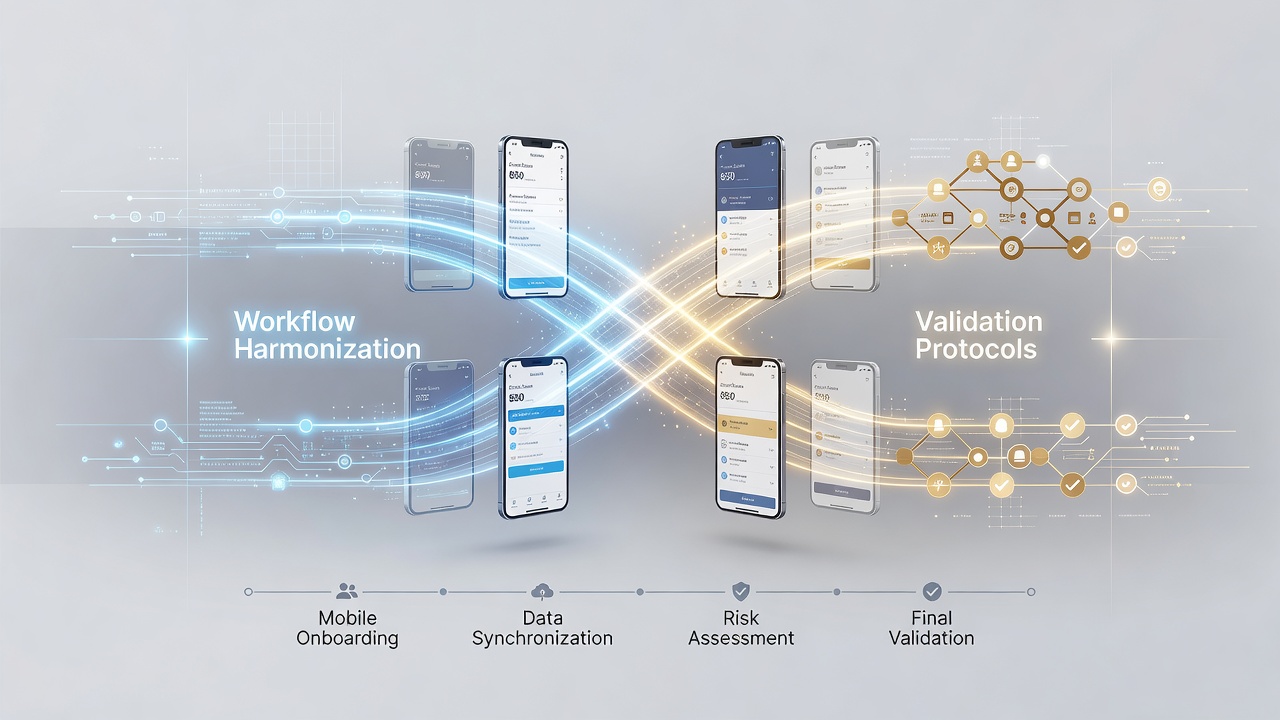
Workflow harmonization refers to the standardization of steps that move a credit application or transaction from initiation to completion, whereas validation protocols cover the layered checks that confirm identity, creditworthiness, and compliance at each stage. When these two areas operate in tandem, systems reduce redundant data entry and limit the points where errors can occur. Research indicates that integrated setups allow real-time updates to flow between customer onboarding modules and fraud screening engines, which cuts processing times while preserving audit trails.
Observers note that successful implementations often rely on shared data formats and common APIs that let different software components exchange information without manual intervention. In August 2026 the European Central Bank published revised guidelines on digital payment infrastructure that explicitly address the need for such alignment in mobile lending environments, highlighting examples from several member states where unified workflows improved both speed and accuracy.
Technical Infrastructure Supporting Coordinated Systems
Modern mobile credit platforms typically combine customer relationship management tools with payment gateways and risk assessment engines through middleware layers designed for compatibility. These layers enforce consistent validation rules across departments while allowing operational teams to adjust sequences based on transaction type or customer profile. Studies from academic sources reveal that platforms using modular architectures achieve higher uptime because changes to one validation step propagate automatically to related workflow stages rather than requiring separate updates.
Encryption standards and tokenization methods play a central role here because they must apply uniformly whether data moves through administrative queues or security checkpoints. Institutions that maintain separate encryption policies for each function often encounter mismatches that trigger additional reviews, whereas unified policies avoid such friction. Figures from the Federal Reserve's 2025 payments report show a measurable decline in exception handling rates among banks that consolidated these policies during the previous two years.
Regulatory Pressures Driving Alignment
Global standards such as those maintained by the PCI Security Standards Council require consistent application of authentication and data protection rules throughout every stage of a mobile credit transaction. Regulators in Canada and Australia have issued parallel directives that tie operational reporting requirements directly to validation audit logs, making it harder for organizations to maintain disconnected systems. One study released by a university research group in 2025 tracked institutions across three continents and found that those with harmonized workflows passed compliance examinations with fewer remediation steps than peers using fragmented approaches.
Yet the transition involves mapping existing processes against new validation requirements, which often reveals gaps in data lineage tracking or escalation procedures. Teams that document these mappings in shared repositories enable faster adjustments when rules change, a practice that has become more common since mid-2025.
Practical Outcomes Observed in Deployed Systems
Organizations that completed integration projects report shorter reconciliation cycles at month-end because transaction records and compliance flags reside in the same datasets. Support teams gain visibility into why certain validations triggered holds, allowing them to resolve customer inquiries without escalating to separate security units. Data collected by industry associations in the Asia-Pacific region indicates that such visibility correlates with lower repeat contact rates on disputed mobile credit charges.
Automated monitoring tools now track both workflow completion rates and validation pass percentages within single dashboards, giving managers a unified view of system health. When anomalies appear in either metric, alerts route to the appropriate teams through predefined channels rather than ad-hoc communications.
Conclusion
The alignment of operational sequences with compliance mechanisms continues to shape how mobile credit platforms handle growing transaction volumes adn evolving regulatory expectations. Evidence from regulatory releases, industry reports, and academic analyses points to measurable improvements in processing consistency when institutions treat workflow and validation elements as interdependent rather than separate domains. As platforms scale further into 2026 and beyond, the emphasis remains on maintaining synchronized data flows that support both efficiency and security without creating new points of failure.