Aligning Operational Timelines with Verification Protocols Across Wireless Retail Networks
Willa Lang · Aug 21, 2026
Aligning Operational Timelines with Verification Protocols Across Wireless Retail Networks
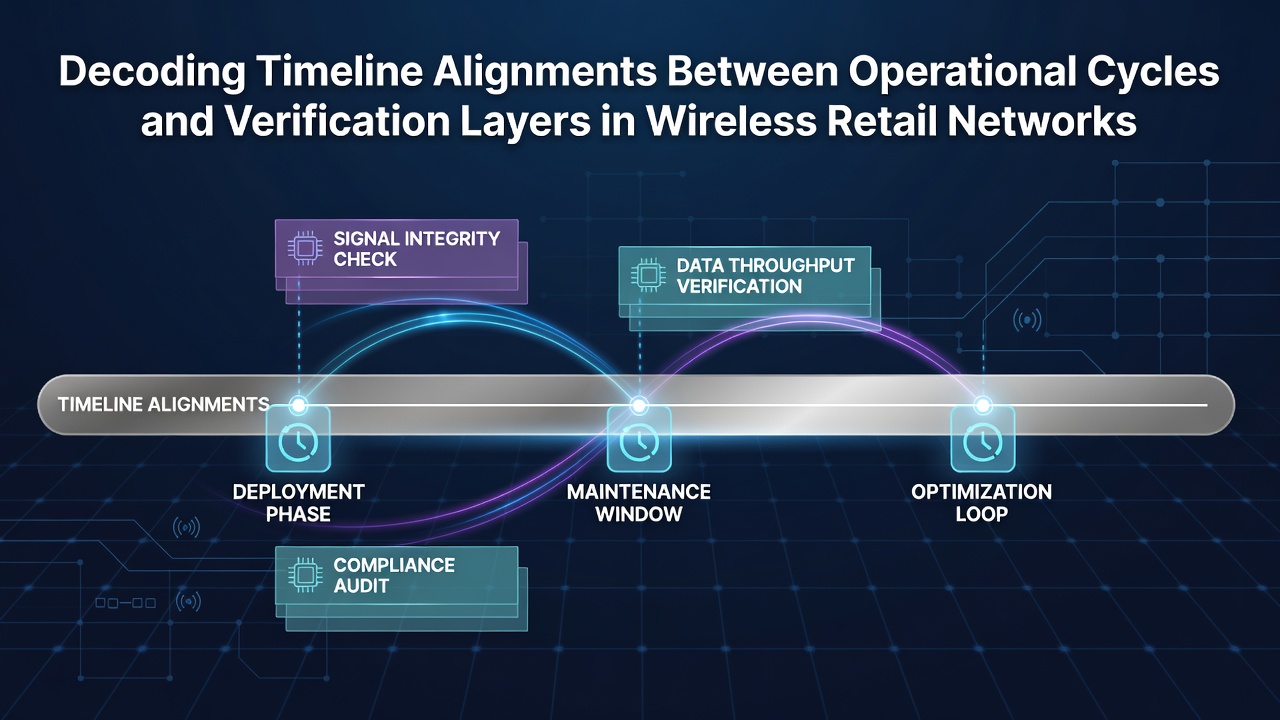
Wireless retail networks rely on precise coordination between operational cycles and verification layers to maintain transaction integrity and inventory accuracy across distributed store locations. Retail operators deploy these networks to handle real-time data exchanges for point-of-sale systems, stock monitoring, and customer authentication, and the alignment process ensures that timing sequences match security checkpoints without introducing delays.
Data from the Federal Communications Commission indicates that wireless spectrum allocations for retail applications expanded significantly between 2023 and 2025, which created new requirements for cycle synchronization in high-density urban deployments. Operators must map daily operational rhythms such as opening procedures, peak sales periods, and closing inventories against multi-tier verification protocols that include device authentication, data encryption checks, and anomaly detection routines.
Mapping Operational Cycles in Retail Wireless Environments
Operational cycles in wireless retail settings typically follow predictable patterns tied to business hours, supply chain deliveries, and promotional events. Researchers at the University of Melbourne documented how these cycles interact with network traffic loads in a 2024 study, revealing that peak verification demands often coincide with midday customer surges when multiple handheld scanners and mobile terminals request simultaneous access. Alignment begins with timestamp logging at each node, allowing systems to predict and pre-allocate verification resources before congestion occurs.
Network architects break cycles into segments that include initialization, active transaction windows, maintenance intervals, and shutdown sequences. Each segment carries specific verification requirements, and mismatches between cycle timing and layer activation can trigger false positives in security monitoring tools. In August 2026 the European Telecommunications Standards Institute plans to release updated guidelines on cycle granularity for retail wireless meshes, which will standardize reporting intervals across member states.
Verification Layers and Their Temporal Dependencies
Verification layers operate at different depths within the network stack, ranging from physical device certificates to application-level transaction validation. Each layer maintains its own clock references and retry mechanisms, yet successful operation depends on shared timeline references that prevent desynchronization. Observers note that when operational cycles shift due to extended store hours or flash sales, verification routines must recalibrate their polling frequencies to avoid bottlenecks.
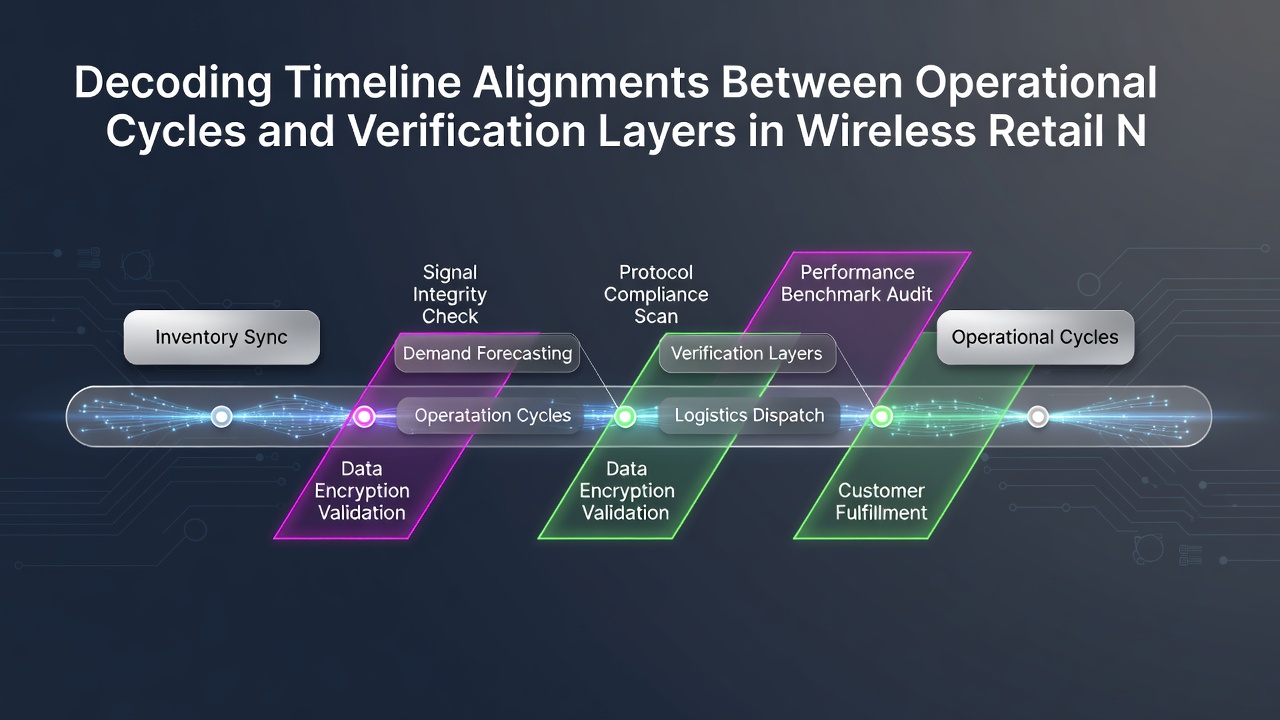
Canadian regulators at Innovation, Science and Economic Development Canada published spectrum usage statistics in early 2025 showing that retail wireless networks experienced a 34 percent increase in simultaneous verification requests during holiday periods. These spikes require preemptive alignment adjustments, where systems advance certain verification steps into earlier cycle phases to distribute computational load evenly.
Technical Mechanisms for Timeline Synchronization
Synchronization protocols such as Precision Time Protocol and network time protocol variants provide the foundational timing infrastructure for these alignments. Retail deployments often integrate these protocols with radio access network schedulers that allocate transmission slots based on anticipated verification needs. When operational cycles include unexpected variables like inventory audits or staff training sessions, the system adjusts verification layer priorities through dynamic slot reassignment.
Case examples from Australian retail chains demonstrate that embedding cycle metadata directly into verification packets reduces latency by allowing layers to anticipate upcoming demands without additional signaling overhead. This approach proves particularly effective in environments where wireless interference from neighboring stores creates variable transmission windows.
Challenges in Maintaining Alignment Under Variable Conditions
Variable conditions such as seasonal traffic fluctuations, equipment firmware updates, and regulatory changes in spectrum licensing introduce friction into timeline alignments. Network logs collected by industry groups show that desynchronization events cluster around transition periods between standard and daylight saving time, when device clocks require manual or automated correction. Verification layers that rely on absolute timestamps rather than relative offsets experience higher failure rates during these windows.
Retail operators address these issues through redundant timing sources and automated drift detection algorithms that compare local clocks against global references at regular intervals. The process maintains continuity even when individual nodes temporarily lose connectivity to primary time servers.
Conclusion
Effective decoding of timeline alignments between operational cycles and verification layers continues to shape performance outcomes in wireless retail networks. Ongoing standards development scheduled for release in August 2026 will further refine synchronization requirements, while data from regulatory bodies and academic studies provide measurable benchmarks for operators seeking to optimize these interactions across diverse geographic regions.