Charting Renewal Patterns: How Billing Tools Anchor API Security Across Merchant Credit Chains
Sofia Schmitz · Jul 8, 2026
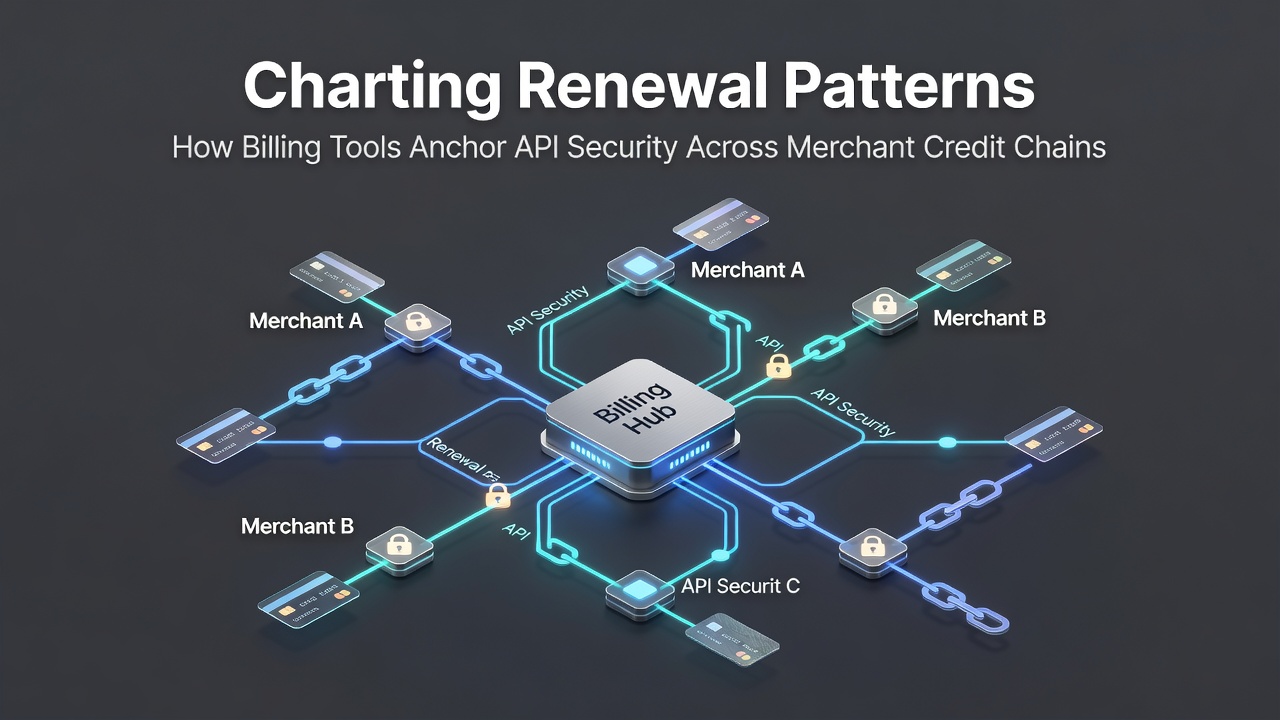
Charting Renewal Patterns: How Billing Tools Anchor API Security Across Merchant Credit Chains
Renewal patterns in merchant credit chains reveal recurring transaction sequences that billing tools monitor through structured API calls, and these tools establish verification checkpoints that stabilize security across the entire processing flow, according to data from payment infrastructure analyses conducted in early 2026.
Merchant credit chains consist of interconnected accounts, processors, and acquirers that handle recurring authorizations, while billing tools manage subscription cycles by issuing renewal requests at defined intervals, and this coordination reduces exposure points where unauthorized access might occur during repeated credit validations.
Mechanics of Billing Tools in Credit Chain Operations
Billing platforms generate renewal triggers based on stored customer data, and they transmit these requests via APIs that embed authentication tokens and encrypted payloads, whereas processors validate each request against historical patterns before releasing funds, and this layered approach maintains continuity in credit authorizations without exposing full card details on every cycle.
API Integration Points for Renewal Handling
APIs serve as the communication backbone between billing systems and credit networks, and developers configure endpoints to handle renewal-specific parameters such as amount adjustments and date shifts, while security protocols require mutual authentication that confirms both the merchant identity and the tool's authorization level before processing begins.
Research from the National Institute of Standards and Technology indicates that standardized API frameworks adopted across North American payment networks have strengthened token management during recurring transactions, and these frameworks limit data transmission to essential elements only.
Security Anchoring Through Renewal Monitoring
Billing tools anchor API security by logging renewal timestamps and amounts against established baselines, and deviations trigger additional verification layers that query the originating merchant account for confirmation before the credit chain advances the transaction, whereas consistent patterns allow streamlined processing that preserves throughput without compromising checks.
Those who have examined transaction logs across multiple merchant segments note that renewal pattern analysis identifies anomalies such as sudden frequency increases or amount spikes, and these detections occur in real time because billing tools compare live requests to stored historical sequences stored within the same API environment.
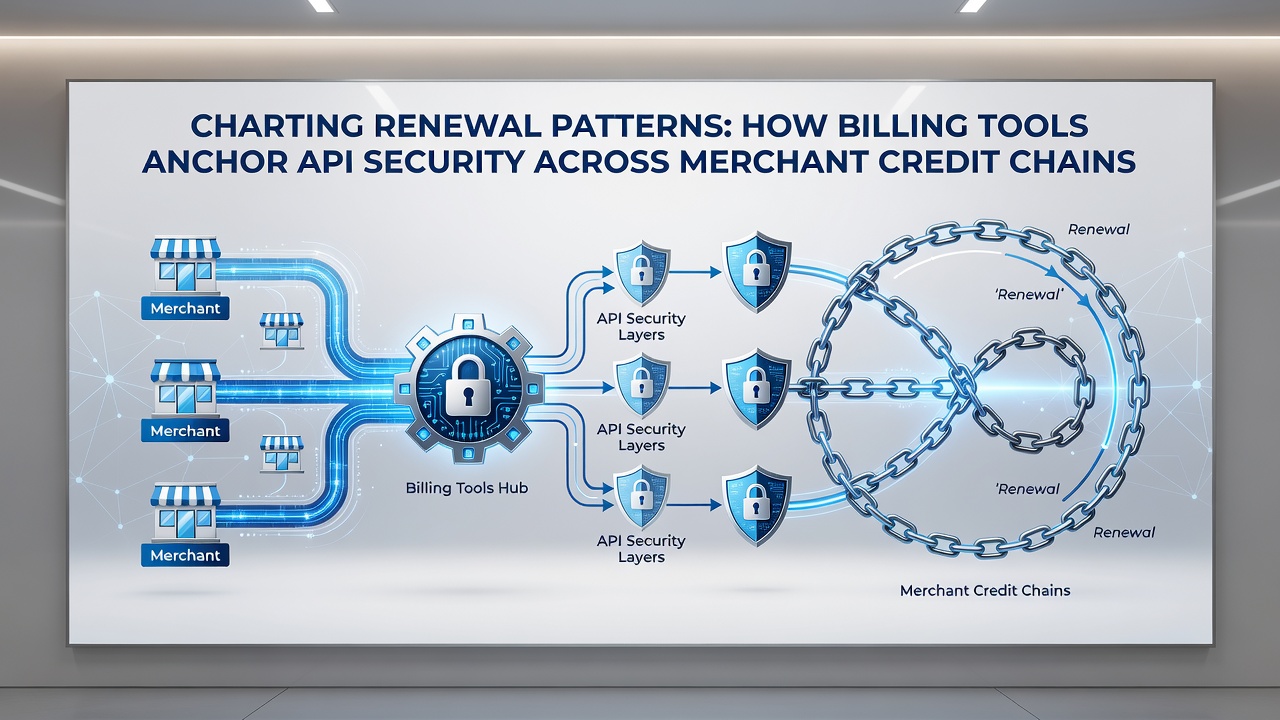
In July 2026, updates to cross-border data handling requirements took effect in several jurisdictions, and billing tools adjusted their API calls to include region-specific compliance flags that processors then validated during renewal sequences, while this adjustment helped maintain uninterrupted credit chain operations for merchants operating internationally.
Pattern Recognition Across Credit Authorization Cycles
Observers note that recurring billing generates predictable authorization clusters, and tools map these clusters to create security baselines that flag outliers during subsequent renewals, whereas integration with fraud scoring engines allows the system to adjust risk thresholds dynamically based on the merchant's historical renewal behavior.
One analysis of European payment ecosystems conducted by the European Central Bank revealed that merchants using dedicated billing platforms experienced fewer API-related interruptions in renewal flows compared to those relying on manual scheduling, and the difference traced back to automated pattern matching that occurred at the API level before each credit request reached the acquirer.
Canadian regulatory guidance from the Office of the Superintendent of Financial Institutions emphasizes encryption standards for recurring payment APIs, and billing tools apply these standards uniformly across all renewal transmissions so that credit chains receive protected data regardless of transaction volume.
Case Examples of Pattern-Based Security
Take one mid-sized retail operation that implemented billing tool APIs in 2025, and the system detected an irregular renewal attempt originating from an unexpected geographic location, while the tool paused the credit authorization until secondary merchant confirmation arrived through a separate administrative channel.
Another instance involved a subscription service provider whose renewal volume doubled during a promotional period, and the billing platform adjusted API security parameters automatically to accommodate the surge without triggering false blocks at the processor level.
Interconnections Between Billing Logic and Credit Chain Integrity
Billing tools maintain persistent connections to merchant accounts that allow real-time updates to renewal parameters, and these connections anchor API security because any change in account status immediately propagates to pending credit requests, whereas processors rely on this synchronized data to confirm authorization validity before completing each transaction.
What's interesting is how renewal intervals themselves become security signals, since irregular timing can indicate compromised credentials attempting to exploit the credit chain, and billing tools embed timing analysis directly into their API request generation to surface these signals early.
Academic studies from research institutions in Australia have documented similar benefits in recurring payment environments, where pattern-aware billing systems reduced unauthorized transaction attempts by correlating renewal data with account-level controls before API calls reached external networks.
Conclusion
Renewal patterns provide measurable data points that billing tools convert into API security controls throughout merchant credit chains, and coordinated monitoring across these elements sustains transaction integrity while accommodating volume fluctuations and regulatory shifts, such as those observed in July 2026.
Continued alignment between billing logic and credit processing standards supports stable operations as merchant ecosystems evolve, and the documented practices show how these tools anchor verification at multiple stages without disrupting legitimate renewal flows.