Coordinating Archival Norms and Authorization Sequences Across International Digital Retail Clearing Networks
Tina Ludwig · Jul 12, 2026
Coordinating Archival Norms and Authorization Sequences Across International Digital Retail Clearing Networks
Global e-commerce settlement systems handle billions of transactions each day, and organizations maintain extensive records while routing those transactions through layered approval processes. Data from the Bank for International Settlements shows that coordinated approaches between documentation practices and decision sequences reduce processing delays in cross-border payments by measurable margins. Researchers at various institutions note that mismatches between archived transaction details and authorization checkpoints often create bottlenecks in settlement timelines, particularly when multiple jurisdictions apply differing compliance requirements.
Documentation Practices in Settlement Environments
Record-keeping standards establish consistent formats for capturing transaction metadata, merchant identifiers, and settlement amounts across platforms. These frameworks draw from international guidelines that emphasize traceability without prescribing specific software implementations. Observers note that standardized archival methods allow settlement operators to retrieve historical data quickly during reconciliation cycles, and this capability becomes essential when disputes arise weeks after initial processing. In July 2026 several regional bodies plan to align their reporting templates further, which could simplify data exchange between Asian and European clearing houses that currently maintain parallel but incompatible logs.
Authorization Sequences and Operational Flow
Approval workflows define the sequence of verifications that precede fund movement, including risk scoring, compliance checks, and final settlement confirmation. Systems that embed these sequences directly into record management tools enable operators to flag incomplete entries before they reach later stages. Studies from academic centers focused on payment infrastructure indicate that early detection of documentation gaps prevents downstream rejections, and the resulting efficiency gains appear across both high-volume retail channels and specialized B2B marketplaces. Those who manage large-scale operations often discover that workflow automation tied to archival rules cuts manual review hours significantly.
Integration Points Between Records and Approvals
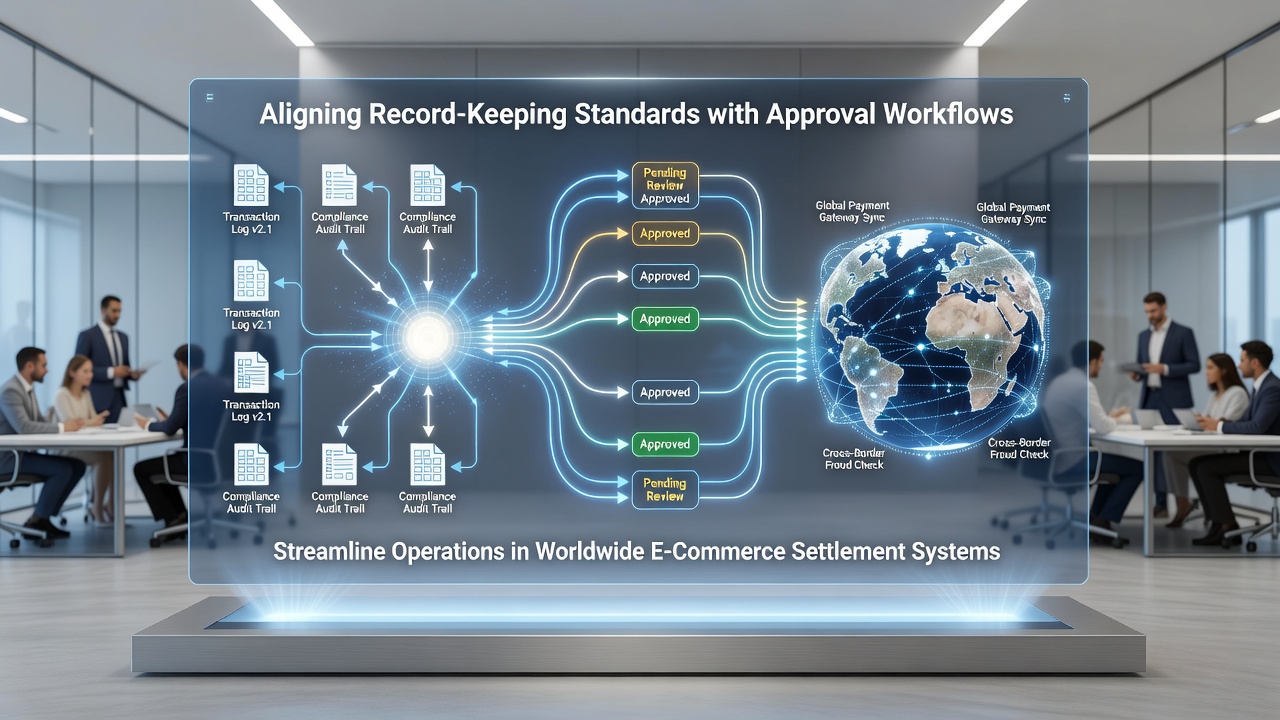
Alignment occurs at specific touchpoints where archived data feeds directly into authorization engines. For instance, a settlement system might require a verified merchant identifier before releasing funds, and the archival layer supplies that identifier in real time. This linkage reduces the need for duplicate data entry and minimizes transcription errors that historically triggered settlement holds. Experts tracking worldwide payment networks report that platforms adopting unified schemas experience fewer interruptions during peak shopping periods, such as regional holiday surges that test system capacity. The approach also supports audit readiness, since every approved transaction carries traceable documentation from the moment of initiation.

Regional variations still exist, yet convergence toward shared data fields accelerates as settlement networks expand. Canadian authorities, for example, have published guidance that encourages mapping domestic record fields to international standards used by clearing entities in the Asia-Pacific region. Meanwhile, research published by university payment labs highlights how API-driven connections between archival databases and approval modules enable near-instant status updates across borders. Operators who implement these connections observe shorter settlement cycles and lower exception rates, particularly when handling multi-currency transactions that require simultaneous verification of exchange rates and tax obligations.
Global Implementation Patterns
Merchants operating across continents benefit when their settlement providers apply consistent archival rules to every authorization step. One documented case involved a mid-sized retailer that consolidated its European and North American transaction logs under a single schema, after which reconciliation time dropped from several days to under twenty-four hours. Similar patterns emerge in reports from industry working groups that track settlement performance metrics. These groups emphasize that the technical integration requires careful mapping of data elements rather than wholesale replacement of existing systems, allowing gradual adoption without service disruption.
Security considerations also factor into the alignment process. Authorization workflows that reference complete archival records can apply more granular fraud filters, since historical patterns become immediately accessible during live decision making. Regulatory updates scheduled for mid-2026 in several jurisdictions aim to formalize minimum data retention periods tied to approval logs, which may further encourage unified record and workflow architectures.
Conclusion
Worldwide e-commerce settlement systems continue to evolve through tighter coordination of documentation standards and authorization sequences. Evidence from regulatory publications and infrastructure studies shows measurable improvements in processing speed and audit efficiency when these elements operate in tandem. As additional regions adopt compatible frameworks in the coming years, settlement operators gain clearer pathways for managing high volumes of cross-border activity while maintaining compliance across diverse markets.