Coordinating Renewal Timelines with Authentication Protocols in Integrated Merchant Platforms
Henrik Fischer · Jun 26, 2026

Coordinating Renewal Timelines with Authentication Protocols in Integrated Merchant Platforms
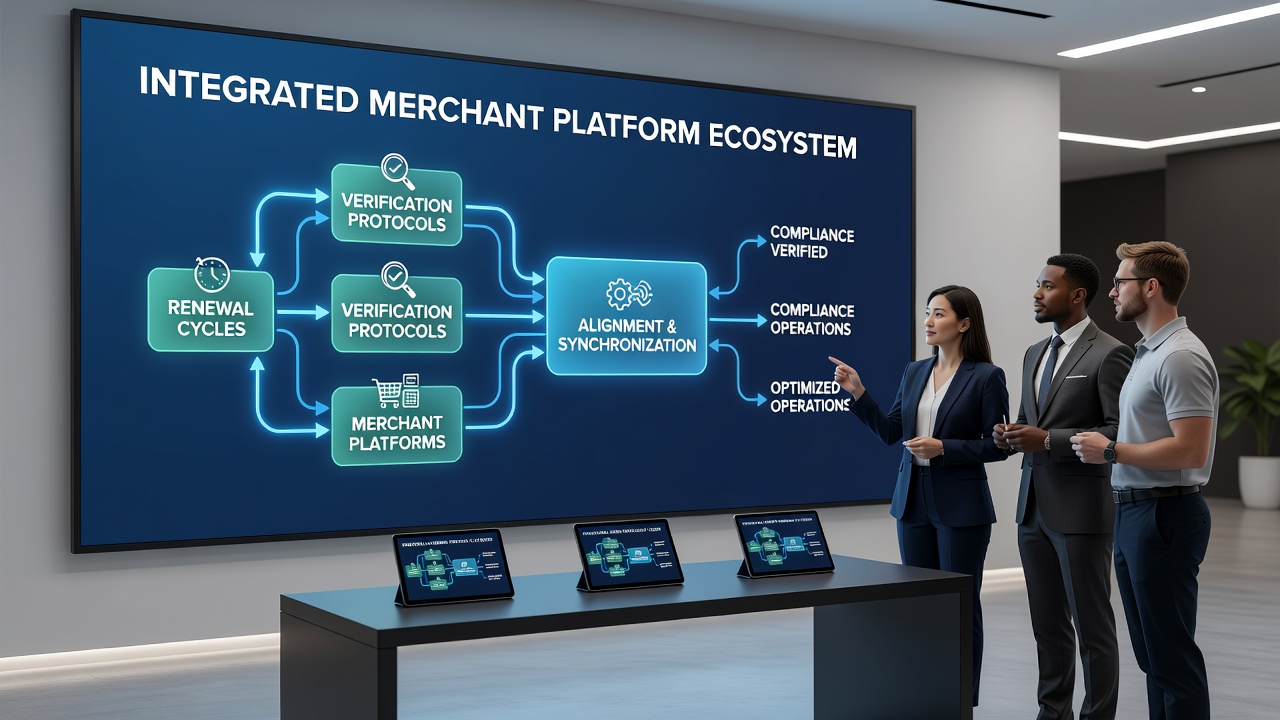
Merchant platforms that connect billing systems with security layers often require precise coordination between renewal timelines and authentication steps, and this coordination helps maintain transaction integrity across multiple vendors. Research indicates that when renewal cycles align with verification protocols, platforms reduce instances of mismatched account statuses while supporting continuous compliance checks. Data from industry reports shows that such alignments occur most effectively through shared APIs that update user credentials at set intervals, and those intervals typically match billing periods to avoid service interruptions.
Understanding Core Components in Platform Integration
Renewal cycles cover subscription periods, automatic rebilling dates, and account extension triggers, whereas verification protocols include identity confirmation routines, multi-factor authentication sequences, and compliance data refreshes. Observers note that integrated systems link these elements so a renewal request automatically initiates a verification scan if the last check exceeds a defined threshold. Studies have found that platforms using unified databases for both functions achieve faster processing times because they avoid separate queries to isolated modules, and this setup proves especially useful in environments handling high volumes of recurring transactions.
Technical Mechanisms That Support Synchronization
Developers implement timestamp matching and event-driven triggers to keep renewal dates synchronized with verification windows, and these triggers activate when a cycle approaches its end or when external signals indicate potential risk changes. According to guidelines published by the National Institute of Standards and Technology, consistent timing between these events strengthens overall account security without adding excessive user friction. Systems often employ webhook notifications that push updates from the billing service to the verification service in real time, allowing both components to reference the same dataset for decision making.
Case Examples from Current Deployments
One deployment in retail software suites demonstrates how a merchant account automatically schedules verification prompts thirty days before renewal, and this practice aligns with data retention rules that require fresh consent records at regular intervals. Another setup in service-based platforms uses quarterly verification batches that coincide with annual renewal peaks, reducing peak-load strain on support teams while ensuring every renewed account carries updated authentication markers. Figures reveal that platforms adopting these methods report fewer account lockouts during billing events because verification steps complete well before payment attempts begin.
Regulatory Influences on Alignment Practices
Regulatory frameworks in multiple regions encourage or require periodic re-verification that can intersect with billing cycles, and platforms must map these requirements onto their existing renewal schedules to stay compliant. As of June 2026, updates from the European Central Bank emphasize tighter timing controls for recurring payment authorizations, prompting many integrated systems to embed verification checkpoints directly into renewal workflows. Platforms operating across borders therefore maintain configuration layers that adjust cycle lengths based on jurisdiction-specific rules while preserving a single operational timeline for merchants.
Operational Benefits Observed Across Networks
When renewal and verification functions share data pipelines, support teams encounter fewer escalations related to expired credentials or declined renewals stemming from outdated checks, and analytics dashboards display unified metrics that highlight both billing success rates and verification completion percentages. Research from the Australian Payments Network indicates that coordinated systems lower the average time required to resolve account status conflicts because all relevant data resides in one accessible structure rather than scattered across separate services. This consolidation also supports audit trails that document every renewal alongside its corresponding verification event.
Challenges in Maintaining Consistent Alignment
Differences in update frequencies between billing engines and security modules can create temporary gaps where a renewal proceeds without a fresh verification, and platform architects address this by establishing fallback rules that pause billing until verification clears. Legacy integrations sometimes require custom middleware to translate date formats and trigger conditions between older and newer components, yet successful implementations show that these additions remain manageable when built on standardized data schemas. Observers note that ongoing monitoring of clock synchronization across distributed servers further prevents drift that might otherwise misalign scheduled events.
Future Developments in Platform Coordination
Emerging standards focus on machine-readable policy files that allow platforms to automatically adjust renewal-verification pairings based on risk signals or regulatory shifts, and early adopters report smoother transitions when these files integrate with existing API gateways. Continued refinement of these approaches supports broader adoption among merchants who operate through multiple interconnected services, ensuring that both financial and security obligations remain current without manual intervention at each step.
Conclusion
Coordinated renewal timelines and authentication protocols deliver measurable improvements in account management efficiency across integrated merchant platforms, and the mechanisms that achieve this coordination continue to evolve with regulatory and technical advancements. Platforms that embed these alignments into their core architecture position themselves to handle recurring transactions with reduced friction while meeting compliance expectations across different operating regions.