Cycle Coordination and API Architecture: Key Elements in Mobile Credit Card Fraud Mitigation Strategies
Avery Reed · Jul 10, 2026
Cycle Coordination and API Architecture: Key Elements in Mobile Credit Card Fraud Mitigation Strategies
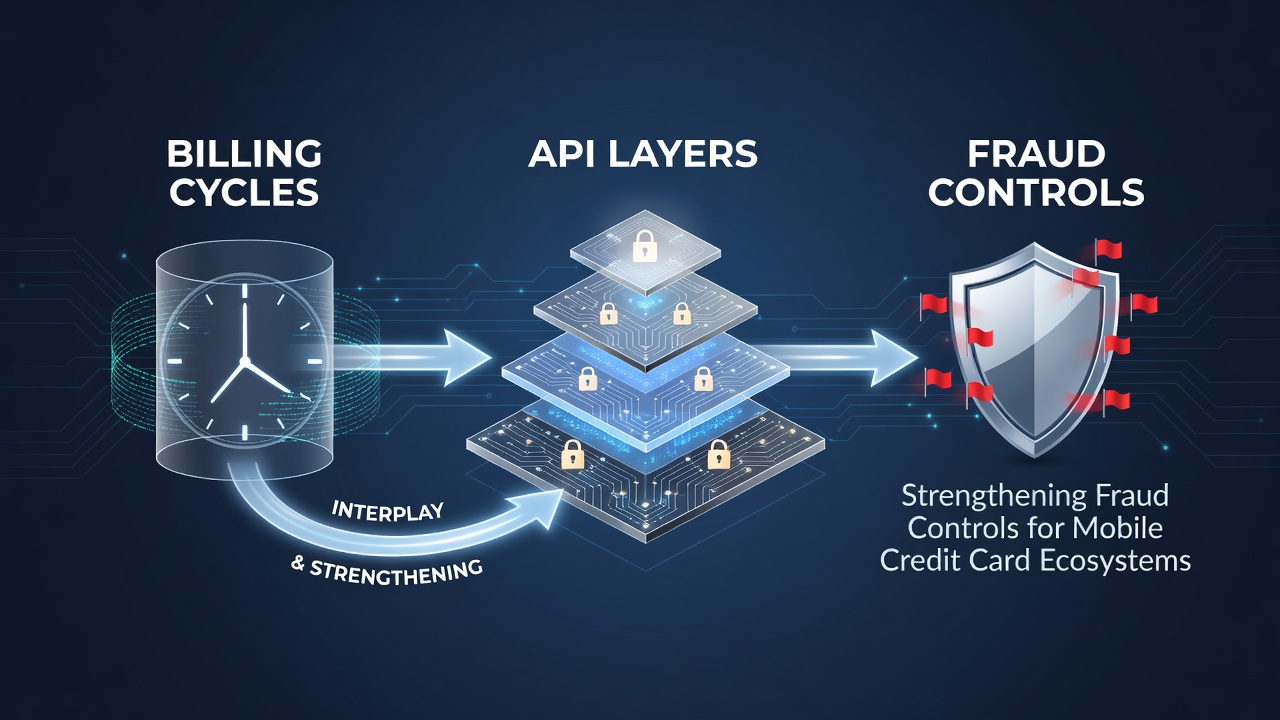
Observers note that billing cycles establish predictable intervals for transaction processing while API layers supply the technical interfaces that validate each step in mobile credit card ecosystems. Researchers at academic institutions have documented how these two components interact to create checkpoints that flag irregular activity before funds move. Data from transaction monitoring platforms shows that systems aligning renewal dates with layered API calls experience fewer unauthorized attempts compared to those operating without such coordination.
Defining the Components in Mobile Credit Card Flows
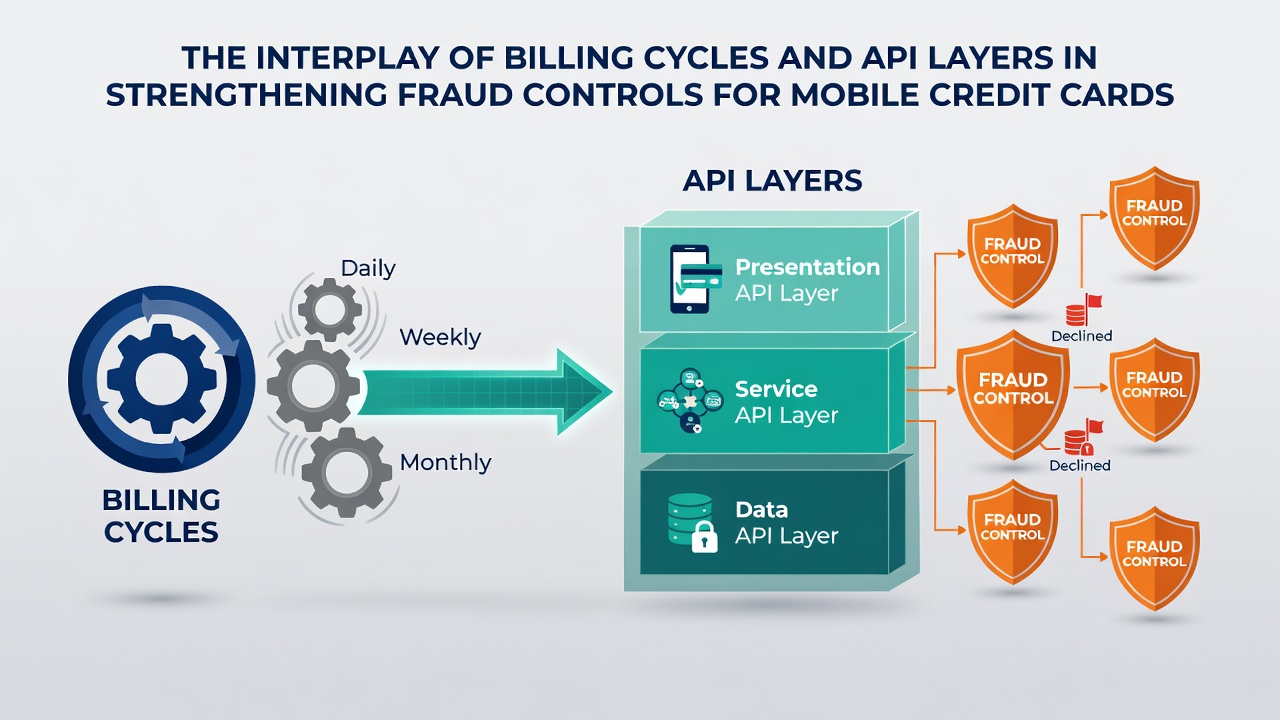
Billing cycles represent scheduled periods during which charges accumulate and settle, typically spanning thirty days in consumer credit arrangements. These periods allow issuers to batch authorizations and run aggregate risk assessments. API layers, by contrast, consist of modular interfaces that handle real-time queries for card tokenization, device fingerprinting, and behavioral scoring. When these layers connect directly to cycle endpoints, they enable automated triggers that activate additional verification steps at renewal points. Studies from European financial research centers indicate that such integration reduces false positives in fraud alerts by approximately eighteen percent in tested mobile environments.
How Billing Schedules Trigger API Responses
Payment processors configure APIs to monitor cycle boundaries and initiate pre-authorization sequences. For instance, an API endpoint might receive a signal seven days before a cycle closes and cross-reference recent device locations against historical patterns. This process occurs without user intervention yet surfaces discrepancies that manual review teams can address. Figures released by the Federal Trade Commission in mid-2026 highlight that coordinated cycle-API systems captured over two million suspicious mobile transactions in the first half of the year alone. The mechanism works because billing dates create natural pause points where cumulative data becomes available for deeper inspection through API calls.
Integration Points Across Ecosystem Layers
Developers map specific API functions to distinct phases within each billing cycle. Token refresh protocols activate at the start of a new period while velocity checks intensify near the close. These mappings rely on standardized protocols that allow issuers and merchants to exchange data without exposing full card details. One case study from a Canadian university research project demonstrated that when API rate limits adjust dynamically according to cycle volume, the incidence of rapid-fire testing attacks drops measurably. Such adjustments occur through configuration files that reference both time-based triggers and transaction count thresholds.
Real-World Implementation Patterns Observed in July 2026
By July 2026, several large mobile wallet providers had deployed cycle-aware API orchestration that pauses recurring payments when risk scores exceed preset thresholds. The approach combines calendar-based scheduling with instantaneous API lookups to geolocation services and credit bureau feeds. Industry reports compiled by Asia-Pacific payment associations reveal that these combined controls prevented an estimated forty-three thousand fraudulent attempts across participating networks during the preceding quarter. Implementation typically involves middleware that translates billing calendar events into API payloads formatted for downstream security modules.
Security Outcomes Linked to Synchronized Operations
Evidence from multiple transaction datasets indicates that desynchronized systems leave gaps during which fraudsters can exploit timing differences between scheduled billing and live API validation. When alignment exists, each cycle reset forces a fresh authentication handshake that incorporates the latest device and behavioral signals. This continuous refresh reduces reliance on static tokens that might have been compromised in earlier periods. Observers tracking global payment security note that regions adopting unified cycle-API frameworks report consistent declines in chargeback ratios over successive twelve-month windows.
Technical Considerations for Maintaining Alignment
Engineers must account for time zone variances and daylight saving transitions when programming cycle triggers into API orchestration logic. Latency between billing system events and API responses requires buffering mechanisms that queue validations without delaying legitimate user experiences. Documentation from standards bodies such as the European Central Bank emphasizes the need for audit logs that capture both cycle timestamps and corresponding API response codes. These logs support post-incident analysis and regulatory reporting requirements that apply to mobile credit card issuers operating across borders.
Conclusion
The documented interplay between billing cycles and API layers produces measurable improvements in fraud detection accuracy within mobile credit card ecosystems. Organizations that embed cycle events as native triggers within their API architectures gain structured opportunities to apply layered checks at predictable intervals. Continued refinement of these connections, informed by ongoing data collection efforts, supports the evolution of transaction security protocols as usage patterns shift.