Mapping Renewal Timelines and Validation Protocols Across Merchant Account Networks
Willa Lang · Jul 17, 2026
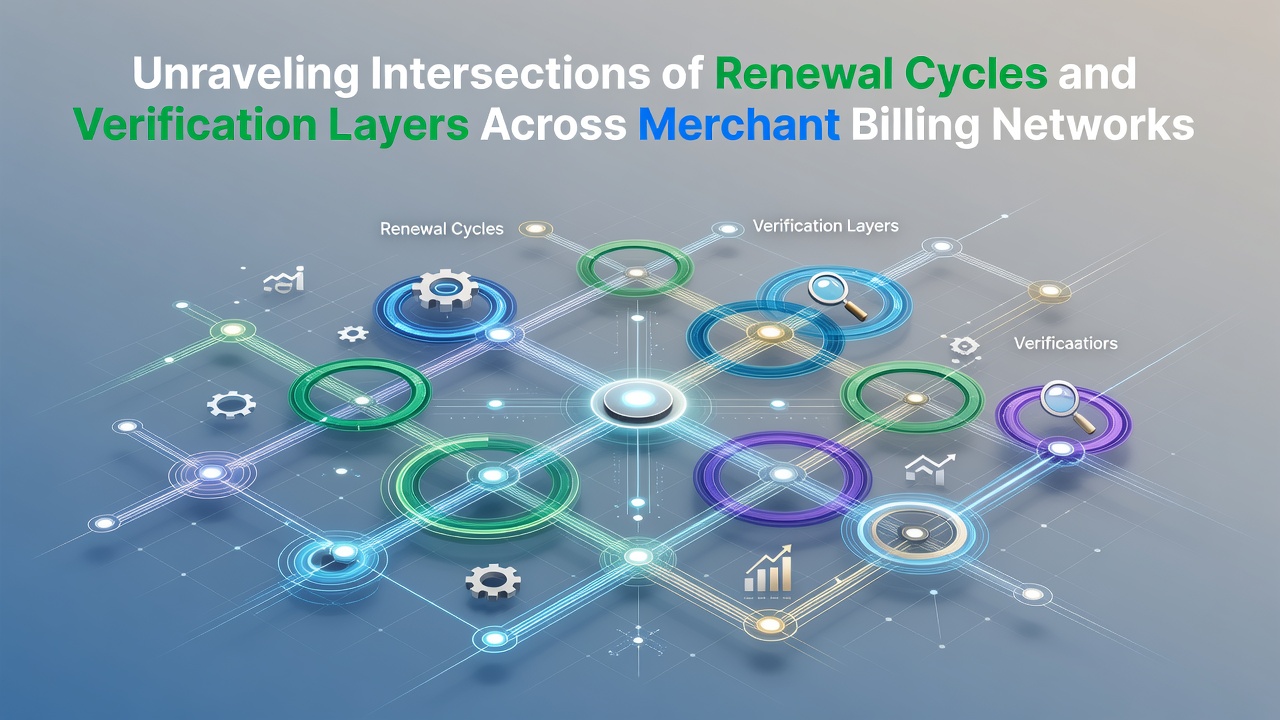
Mapping Renewal Timelines and Validation Protocols Across Merchant Account Networks
Merchant billing networks operate through recurring charge schedules that align with customer agreements while verification protocols ensure each step meets established standards, and these two elements intersect at multiple points within operational frameworks. Renewal cycles determine when accounts trigger new billing events, whereas verification layers apply checks on transaction details, account status, and compliance requirements before processing continues.
Defining Renewal Cycles in Practice
Renewal cycles follow patterns set by subscription terms or service agreements, which range from monthly intervals to annual resets depending on the merchant category and contract type. Data from the Federal Reserve's 2024 payments report shows that recurring transactions account for over 40 percent of card-not-present volume in North American markets, with cycle lengths varying widely across retail, software, and utility sectors. These cycles connect directly to billing system calendars that automate charge attempts on designated dates, and adjustments occur when customers modify plans or when external factors like holidays shift processing windows.
Verification Layers and Their Components
Verification layers consist of sequential checks that include address validation, card authentication, and risk scoring routines applied at each renewal point. Observers note that these layers integrate with network rules established by card schemes and regional regulators, while additional steps such as device fingerprinting and behavioral analysis activate under specific conditions. Research from the Reserve Bank of Australia indicates that layered verification reduces processing errors by measurable margins when applied consistently across automated billing environments.
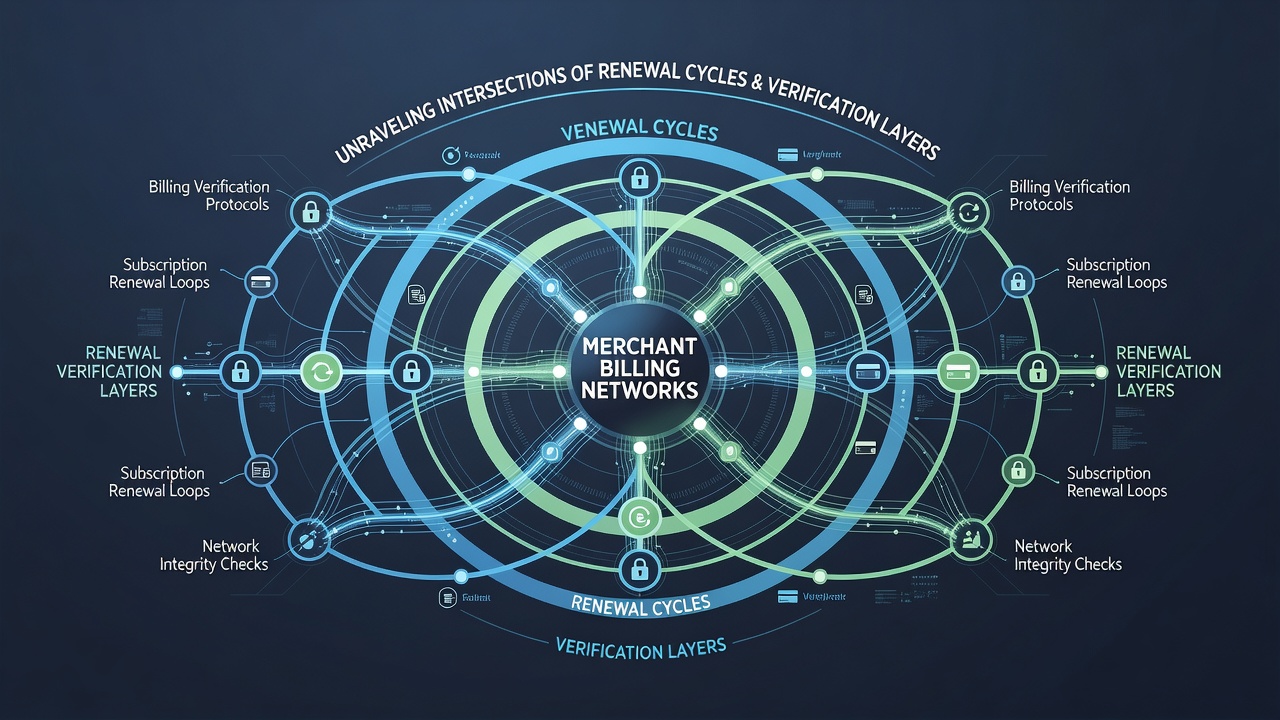
Where Cycles and Layers Converge
Convergence happens when a renewal date arrives and the system routes the transaction through verification stages before funds move. One study revealed that merchants who synchronize renewal triggers with real-time verification updates experience fewer declined attempts, since account changes such as expired cards or updated billing addresses get caught during the validation sequence. Those who've studied transaction logs across multiple gateways often discover that timing mismatches between cycle dates and verification refresh periods create bottlenecks, yet coordinated scheduling resolves many of these delays through automated alerts sent to account holders days in advance.
Integration practices shape outcomes because renewal systems pull data from customer relationship platforms while verification engines query external databases for updated status information. Experts have observed that when these data streams align, processing throughput increases during peak renewal periods such as the start of each fiscal quarter. Figures reveal that organizations maintaining unified dashboards for both cycle management and verification status report smoother operations, particularly when handling high volumes of international accounts subject to varying regulatory requirements.
Operational Patterns Observed in 2026
By July 2026, updates to cross-border payment standards are scheduled to take effect, requiring merchants to refresh verification parameters on renewal cycles that span multiple jurisdictions. Those monitoring regulatory calendars note that these changes will affect how address verification services interface with recurring billing engines, particularly for accounts in the European Union and Asia-Pacific regions. Patterns emerging from pilot programs show that merchants testing synchronized renewal-verification workflows ahead of the deadline encounter fewer compliance queries once the new rules activate.
Take one merchant network that adjusted its renewal calendar to run verification checks 48 hours before each scheduled charge; transaction success rates improved because mismatches in card details surfaced earlier in the sequence. Similar adjustments appear across industries where billing systems now incorporate scheduled verification pings that align with cycle dates, reducing the need for post-renewal corrections.
System Architecture Considerations
Architecture supporting these intersections relies on APIs that pass renewal parameters into verification modules without exposing sensitive fields beyond necessary scopes. Researchers discovered that segmented data flows, where cycle timing information stays separate from full card credentials until the final verification step, maintain both efficiency and security posture. Observers note that legacy systems sometimes require middleware layers to bridge older renewal schedulers with modern validation services, while newer platforms embed these functions within single codebases.
What's significant is how logging mechanisms capture each intersection point, creating audit trails that satisfy reporting obligations under frameworks such as the Payment Card Industry Data Security Standard. These records prove useful during periodic reviews when merchants analyze decline reasons tied to verification failures rather than cycle timing issues.
Conclusion
Renewal cycles and verification layers intersect through shared data pathways and timing dependencies that influence overall billing performance across merchant networks. Coordinated management of these elements supports consistent transaction flows while meeting evolving regulatory expectations, including those slated for mid-2026. Continued alignment between cycle automation and verification protocols remains a focus for organizations operating at scale in electronic commerce environments.