Mapping Verification Data Flows Through Merchant Accounts to Strengthen Mobile Payment Defenses
Avery Reed · Aug 23, 2026

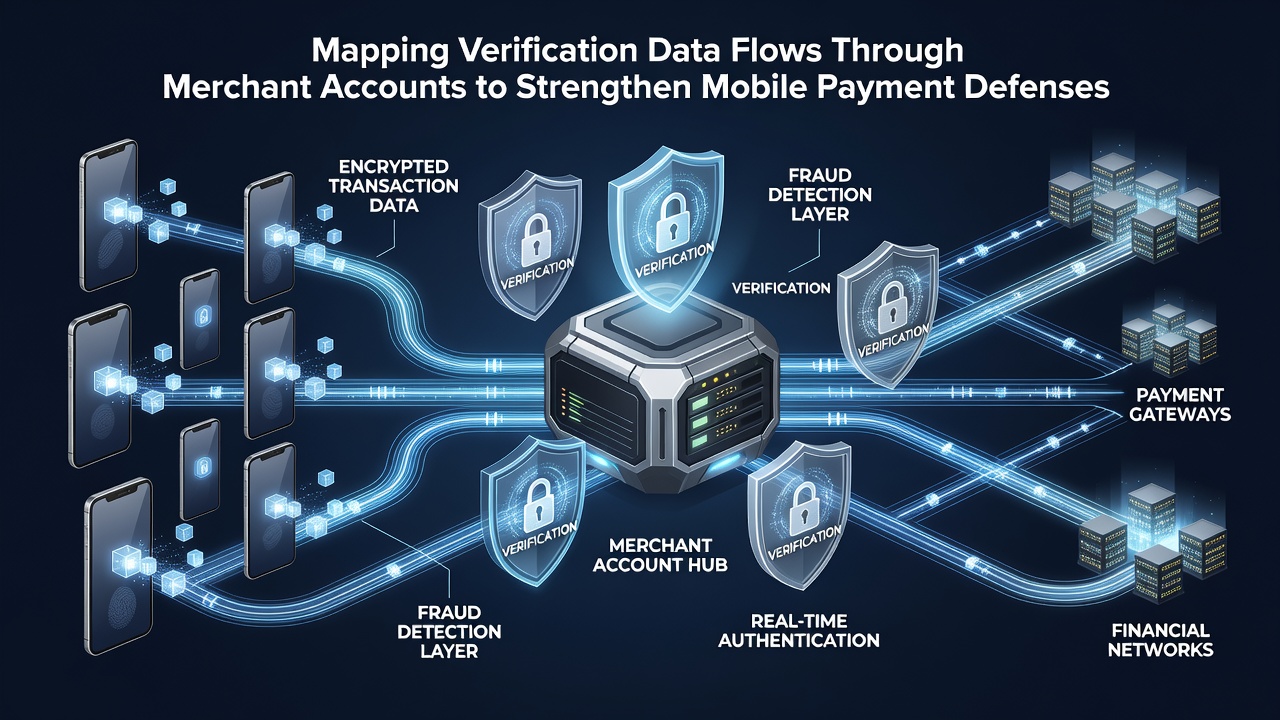
Research indicates that verification data flows represent the sequence of authentication checks, token validations, and risk signals that travel from mobile devices through merchant accounts before transaction approval occurs. Observers note these pathways include device fingerprints, cardholder verification results, and address verification service responses that merchants collect during checkout. Data shows mapping these flows allows organizations to identify where information pauses, duplicates, or gets altered across multiple systems. Payment processors record each step as a transaction request moves from the mobile application interface into the merchant account database, then onward to acquiring banks and card networks. According to industry reports, this mapping process reveals points where verification data might bypass standard controls or enter through unsecured endpoints. Those who've examined transaction logs in August 2026 found that many mobile merchants still route verification elements through legacy batch processes that create temporary storage gaps.Core Components of Verification Data in Merchant Environments
Verification elements typically encompass three main categories: identity tokens, device signals, and transaction context data. Identity tokens include primary account numbers tokenized at the point of capture, while device signals cover operating system versions, geolocation stamps, and behavioral biometrics collected during app interaction. Transaction context data adds details such as purchase amount, merchant category code, and prior transaction history linked to the same account.
Experts have observed that when these components travel through a merchant account, they often pass through separate modules for fraud scoring, compliance logging, and settlement preparation. Mapping requires documenting each handoff point so analysts can trace whether a verification result reaches the authorization request intact. Studies from payment security firms reveal that incomplete mapping leaves certain verification fields exposed during high-volume periods when system queues overflow.
Techniques for Mapping Data Pathways
Organizations apply sequence diagramming and log correlation tools to reconstruct verification routes. Sequence diagrams illustrate the order of API calls between the mobile SDK, merchant gateway, and internal risk engines, while log correlation matches timestamps across servers to confirm data integrity at each stage. Researchers discovered that combining these methods highlights discrepancies where a verification flag changes value between the initial capture and the final authorization message.
Additional approaches include embedding unique identifiers in verification payloads that persist across system boundaries. These identifiers allow teams to query databases and reconstruct full flow histories without relying solely on timestamp matching. Figures from network monitoring platforms indicate that identifier-based mapping reduces reconstruction time by aligning disparate log entries that would otherwise require manual review.
Integration with Existing Security Frameworks
Mapped verification flows integrate directly with PCI DSS requirements for protecting cardholder data and maintaining audit trails. The PCI Security Standards Council outlines specific controls for data in transit and at rest that apply to these pathways. Merchants who complete flow mapping can demonstrate where verification data intersects with sensitive authentication data and implement segmentation accordingly.
European Central Bank guidelines further recommend that payment service providers document verification routes as part of operational resilience assessments. This documentation supports incident response by providing clear visibility into which systems hold verification results when anomalies appear. Data collected in August 2026 showed increased adoption of these mapping practices among mid-sized mobile merchants seeking to align with updated reporting standards.
Practical Outcomes from Flow Analysis
One study revealed that merchants who mapped verification flows identified redundant checks that delayed mobile checkouts without adding security value. Removing these redundancies streamlined authorization times while preserving required verification steps. Another analysis found that mapping exposed verification data entering merchant accounts through third-party plugins that lacked encryption during internal transfers.
Teams that maintain updated flow maps report faster root-cause analysis when verification failures spike. They trace the exact module where a signal dropped or became corrupted, then apply targeted fixes rather than broad system audits. Regulatory filings indicate this targeted approach has reduced the scope of compliance reviews in several documented cases.
Conclusion
Mapping verification data flows through merchant accounts provides a structured view of how authentication elements move within mobile payment systems. Organizations that document these pathways gain clearer visibility into potential exposure points and can align controls with established security standards. Continued refinement of mapping techniques supports ongoing adaptation to evolving transaction patterns and regulatory expectations.