Synchronizing Transaction Schedules with Protective Standards in Digital Retail Systems
Henrik Fischer · Jun 12, 2026
Synchronizing Transaction Schedules with Protective Standards in Digital Retail Systems
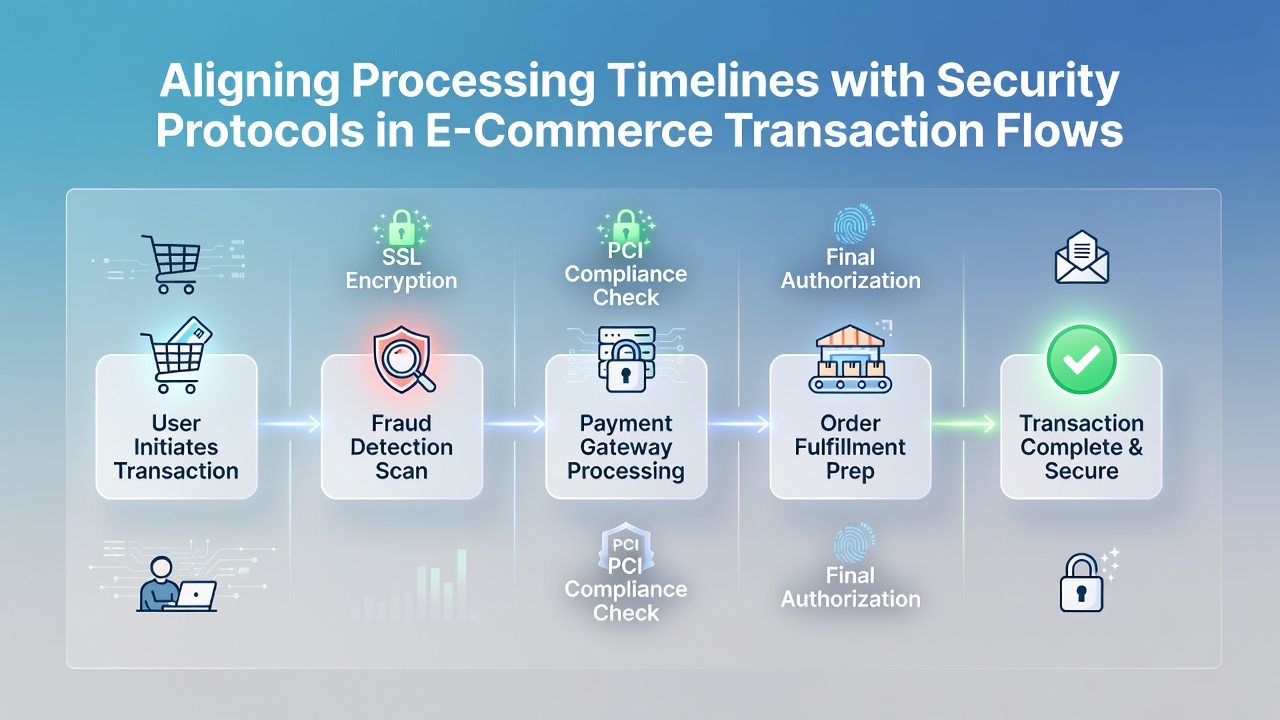
Transaction flows in e-commerce depend on precise coordination between processing windows and layered security measures, since delays in verification steps can create bottlenecks while rushed checks increase exposure to unauthorized activity. Observers note that merchants and payment processors adjust these elements continuously, drawing on data that tracks both completion rates and incident patterns across platforms.
Core Components of Timeline and Protocol Integration
Processing timelines encompass authorization requests, settlement batches, and refund cycles, whereas security protocols include tokenization routines, multi-factor authentication sequences, and real-time fraud scoring engines. Researchers have mapped how these elements intersect, showing that inserting authentication prompts at specific intervals reduces average processing duration by measurable percentages without elevating decline rates. Data from industry reports indicates that platforms which embed risk assessments early in the sequence complete more transactions within the first 300 milliseconds compared to those applying checks later.
Payment gateways often segment flows into stages such as initial capture, risk evaluation, and final confirmation, allowing security layers to activate only when transaction values or behavioral signals cross defined thresholds. This staged approach prevents unnecessary computation on low-risk orders while maintaining vigilance on higher-value ones, and studies reveal corresponding drops in false-positive blocks when thresholds align with historical velocity data.
Regional Regulatory Influences on Schedule Alignment
Standards bodies across regions shape these alignments through guidelines that specify maximum response times for certain verification steps. The National Institute of Standards and Technology outlines timing expectations within its cybersecurity framework that encourage processors to complete authentication within windows that balance user experience and threat mitigation. In parallel, European authorities have issued directives requiring documented procedures for synchronizing settlement cycles with encryption and monitoring obligations, creating consistent benchmarks that operators reference when configuring their systems.
Canadian regulators similarly emphasize audit trails that record both processing durations and security event timestamps, enabling comparisons that highlight where misalignments occur most frequently. These requirements have prompted platforms to adopt automated reconciliation tools that flag deviations exceeding preset tolerances, allowing operators to recalibrate before cumulative delays affect settlement accuracy.
Technical Mechanisms Supporting Coordinated Flows
API endpoints now commonly expose parameters that let merchants specify preferred processing windows alongside required security levels, so the gateway can sequence operations accordingly. One implementation uses event-driven triggers that launch fraud models immediately after card details enter the system, then proceed to authorization only once a score clears internal rules. Such sequencing shortens overall duration because subsequent steps receive pre-validated inputs rather than starting from raw data each time.
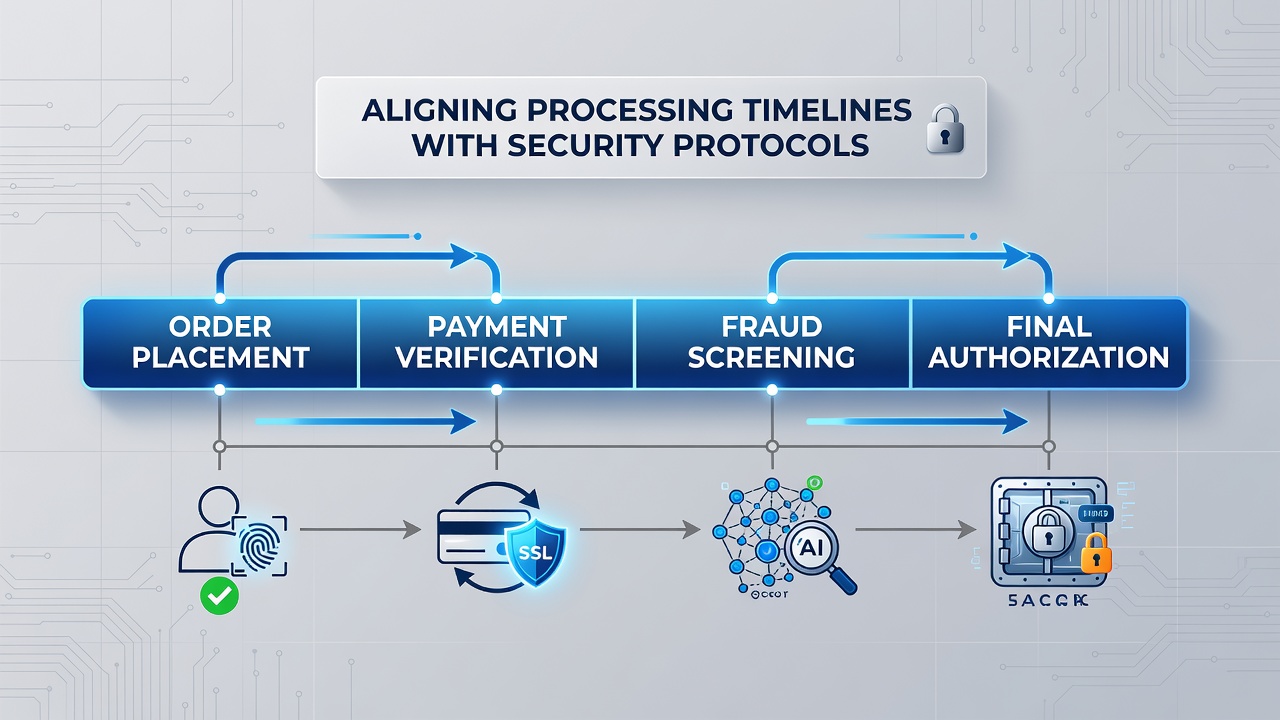
Batch settlement procedures also benefit from tighter integration, since nightly reconciliation runs can incorporate security log reviews that identify anomalies before funds move. Processors that schedule these reviews to coincide with low-traffic periods avoid contention for compute resources, maintaining both speed and thoroughness. Figures released by payment associations show that this timing strategy correlates with fewer settlement disputes traced to overlooked indicators.
Impact on Merchant Operations and System Performance
Merchants who align their internal order-management systems with gateway timelines report smoother handoffs between checkout completion and inventory updates. When security protocols return results within the same window used for stock reservation, abandoned-cart rates decline because customers receive confirmation before leaving the page. Analysts tracking June 2026 platform metrics observed that sites implementing such synchronization handled peak-hour volumes with fewer timeouts than those using sequential, non-overlapped checks.
Database queries supporting these flows often combine transaction logs with security event records in unified tables, reducing the number of round-trips required during high-volume periods. This consolidation supports faster decision loops while preserving the granularity needed for post-transaction audits, and evidence from multiple processor case studies confirms lower latency when queries draw from indexed, time-stamped fields.
Conclusion
Effective coordination between processing timelines and security protocols rests on staged verification, regulatory benchmarks, and technical sequencing that together produce measurable improvements in completion speed and incident reduction. Platforms continue refining these alignments through ongoing analysis of performance data, ensuring that protective measures integrate without disrupting the flow of legitimate commerce.