The Endless Pursuit: Fraud Evasion Tactics in Mobile Payment Gateways and APIs
Willa Lang · Apr 19, 2026
The Endless Pursuit: Fraud Evasion Tactics in Mobile Payment Gateways and APIs
Mobile Merchant Transactions Under the Microscope
Merchants handling mobile transactions face a landscape where speed meets vulnerability, as customers tap, swipe, or scan to complete purchases in seconds; gateways process these flows while APIs enable seamless data exchanges between apps, devices, and backend systems, but fraudsters exploit these same pathways to slip through undetected. Data from the Federal Reserve's 2023 Payments Study reveals that mobile payments surged to over 40% of all U.S. transaction volume, up from 28% two years prior, creating fertile ground for evasion tactics that target weak points in gateway authentication and API endpoints.
And here's where it gets tricky: fraud often masquerades as legitimate activity, blending into high-velocity streams where one compromised API call can approve hundreds of bogus transactions before detection kicks in. Observers note that smaller merchants, reliant on third-party gateways, suffer disproportionately, with average losses climbing 15% year-over-year according to industry trackers.
Gateways as the First Line of Defense—and Breach
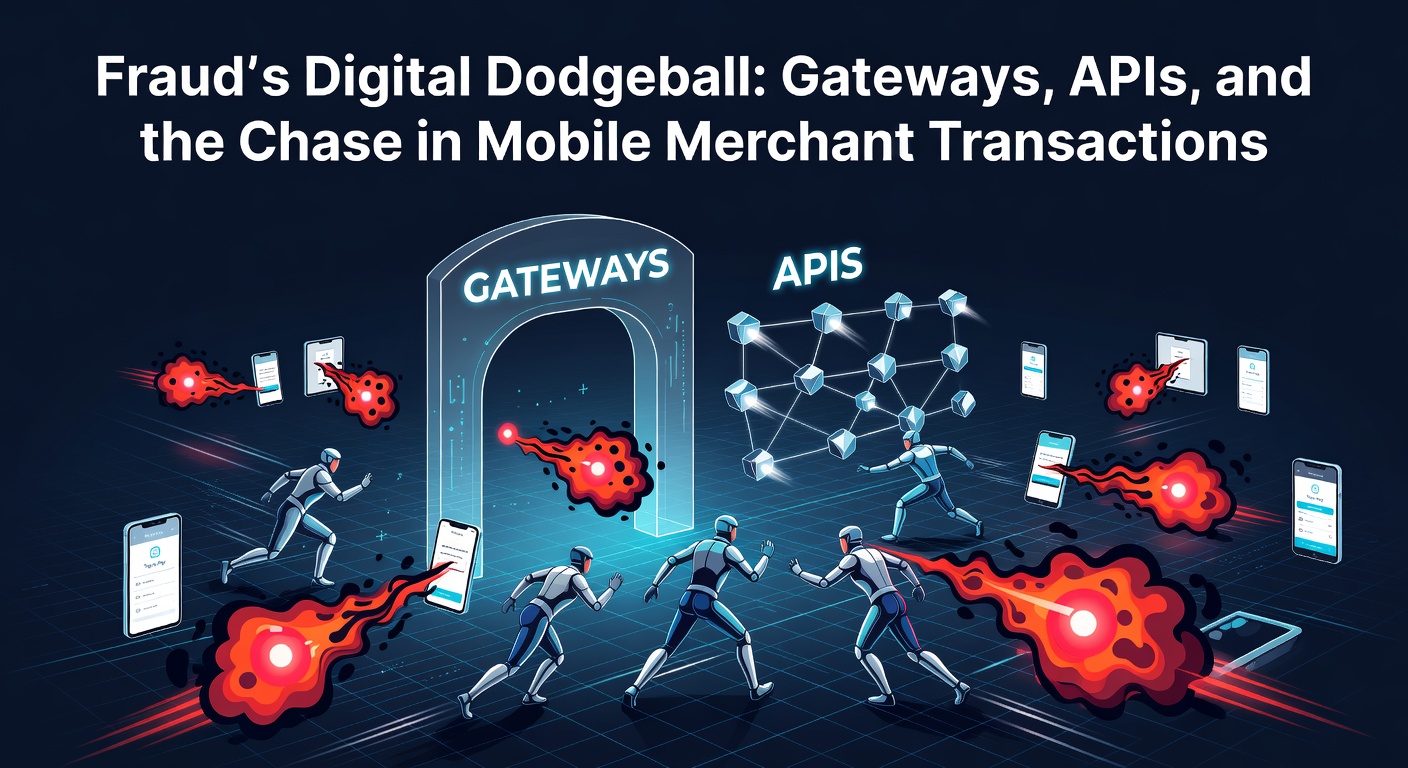
Payment gateways act as the digital bouncers for mobile merchant deals, verifying card details, routing funds, and flagging anomalies, yet fraudsters play dodgeball by rotating IP addresses, emulating device fingerprints, and timing attacks during peak hours when oversight thins out. Take triangulation schemes, where bad actors set up fake storefronts via mobile apps, lure victims with deep discounts, then harvest payment info through gateway APIs without ever shipping goods; researchers at Australia's ACCC documented over 12,000 such cases in 2024 alone, resulting in AUD 150 million in merchant-side losses.
But it's not just outright theft; friendly fraud adds another layer, as buyers dispute valid charges post-delivery, overwhelming gateways with chargeback floods that APIs struggle to differentiate from genuine claims. Experts have observed patterns where fraud rings coordinate these via botnets, hitting multiple merchants simultaneously and forcing gateways to absorb costs until patterns emerge.
- Gateway vulnerabilities often stem from outdated tokenization, allowing replay attacks where stolen session data reruns through APIs.
- Merchants integrating lightweight gateways for speed sacrifice depth in 3D Secure checks, opening doors to card-not-present exploits.
- Cross-border transactions amplify risks, since APIs pulling international BIN data face latency issues that delay real-time scoring.
What's interesting is how fraud adapts: as gateways roll out velocity limits—capping transactions per device or IP—attackers fragment orders into micro-payments, staying under radar while accumulating value.
APIs: The Hidden Backdoors in the Mobile Fraud Game
APIs power the magic of mobile commerce—linking merchant apps to gateways, processors, and even loyalty programs—but they become fraud's playground when misconfigured, with endpoints exposed to injection attacks or unauthorized queries that siphon sensitive data. Studies from cybersecurity firms indicate that 68% of payment API breaches in 2025 traced back to insufficient rate limiting, allowing brute-force guesses on tokenized card numbers during high-traffic events like Black Friday rushes.
Turns out, synthetic identity fraud thrives here: criminals blend real and fabricated data via API calls to create ghost accounts, testing them with low-value probes before escalating to high-ticket mobile buys. One case researchers highlighted involved a ring using residential proxies to mimic legitimate API traffic from shopping apps, evading behavioral analytics in gateways and netting millions before shutdown.
Yet APIs also enable sophisticated defenses, like just-in-time tokenization where fresh keys generate per session; still, fraudsters counter by chaining multiple APIs—merchant to gateway, then to sub-processors—creating blind spots where verification lapses. People who've analyzed breach reports often discover that legacy RESTful APIs, lacking OAuth 2.0 enforcement, serve as prime targets, especially in Android ecosystems where sideloading amplifies risks.
The Chase: How Merchants and Gateways Fight Back
Defenders counter with machine learning models embedded in gateways, scoring transactions in milliseconds by cross-referencing device intelligence, geolocation, and API metadata; data shows these systems blocked 92% of flagged attempts in Q1 2026 trials, per processor benchmarks. But fraud evolves fast, deploying generative AI to craft realistic user agents and session paths that mimic organic mobile behavior, turning the pursuit into an arms race.
Network tokenization emerges as a key tactic, where gateways issue dynamic tokens via APIs that expire after use, slashing replay risks; merchants adopting this saw fraud rates drop 40%, according to consortium reports. And collaborative sharing platforms—where gateways pool anonymized API threat data—prove effective, as seen in initiatives flagging global rings before they hit local mobile streams.
So regulators step in too: Canada's FCAC mandated enhanced API logging for mobile processors by early 2026, aiming to trace evasion chains across borders, while EU's PSD3 directives push gateways toward zero-trust architectures. That's where the rubber meets the road—merchants must audit API integrations quarterly, layering biometrics like face ID over gateway checks to close evasion gaps.
Real-World Cases Lighting the Path
Consider the 2025 breach at a major e-commerce platform, where fraudsters exploited an unsecured checkout API to inject malware into mobile sessions, routing stolen gateway tokens to mule accounts; investigators recovered $8 million, but not before 20,000 transactions slipped through. Or take high-velocity gaming merchants during esports events, facing API floods from bots posing as micro-transaction users—gateways halted 85% via adaptive thresholding, yet the rest funded larger laundering ops.
These stories underscore a truth: isolated gateways falter, but federated defenses—APIs sharing velocity signals across merchants—turn the tide. One study from U.S. fintech researchers revealed that integrated platforms reduced chargeback ratios from 1.2% to 0.4% within six months of deployment.
Looking Ahead to April 2026 and Beyond
By April 2026, ISO 20022 adoption in mobile rails promises richer data flows through gateways, embedding fraud signals directly into API payloads for proactive blocks; early pilots show 25% uplift in detection accuracy. Yet challenges persist, as quantum threats loom over current encryption, prompting gateways to pilot post-quantum algorithms in API handshakes.
Merchants gear up too, with embedded finance models weaving gateways into super-apps, demanding hyper-granular controls; figures indicate global mobile fraud losses could hit $50 billion annually unless API orchestration matures. It's noteworthy that regional variations matter—Asia-Pacific gateways emphasize SMS OTPs, while North America leans on app-bound biometrics—creating opportunities for cross-pollination.
Conclusion
The chase through mobile merchant gateways and APIs boils down to agility: fraud dodges with innovation, but layered defenses—ML scoring, token vaults, shared intel—keep pace when implemented holistically. Data underscores the payoff, with adopters reporting halved losses and boosted trust; as 2026 unfolds, those prioritizing API resilience stand best positioned in this digital dodgeball match.