The Subtle Connections Linking Support Interactions With Secure Processing Protocols in Online Merchant Environments
Henrik Fischer · Jun 24, 2026
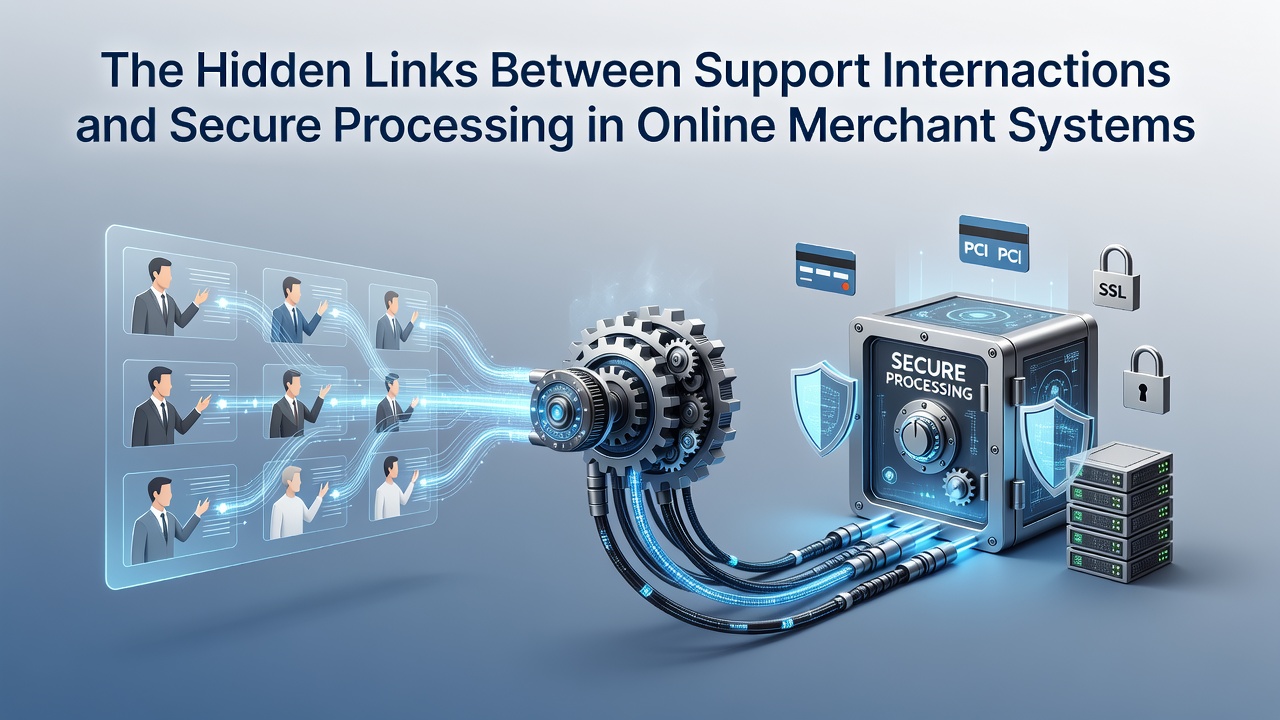
The Subtle Connections Linking Support Interactions With Secure Processing Protocols in Online Merchant Environments
Support interactions in online merchant systems often feed directly into the mechanisms that safeguard transaction processing, creating pathways where customer service data informs encryption checks, authentication layers, and anomaly detection routines. Observers note that when support teams log unusual account queries or repeated verification requests, those records frequently align with patterns monitored by backend security modules to flag potential breaches before they escalate. Research indicates that integration points between these areas allow support notes to trigger automated reviews in processing pipelines, particularly when details involve payment method changes or shipping address updates that deviate from established customer histories.
Integration Points Between Assistance Records and Transaction Safeguards
Merchants maintain databases where support exchanges get cross-referenced with transaction logs through application programming interfaces that pull metadata such as timestamps, device identifiers, and session details. Those who've studied merchant operations find that this linkage helps identify cases where a customer contacts support about a declined payment while simultaneously attempting multiple retries from different locations, prompting the system to apply additional verification steps during subsequent processing. Data shows that in environments where support platforms connect to fraud scoring engines, response times for resolving access issues improve because agents receive contextual alerts drawn from live processing streams rather than isolated ticket information.
June 2026 brought updates to interoperability guidelines from the European Central Bank that encouraged standardized data sharing formats between customer assistance tools and payment gateways, leading many platforms to adopt unified logging schemas. These changes allow support interactions involving account recovery to automatically sync with real-time risk assessments, reducing instances where manual reviews delay legitimate transactions. Experts have observed that such synchronization relies on secure application programming interfaces equipped with tokenization to prevent exposure of sensitive details during the handoff between departments.
Case Examples of Coordinated Workflows in Practice
One documented scenario involved a mid-sized retailer where support staff handling a query about a suspicious login noticed repeated attempts tied to the same email domain, and that observation fed into the processing layer to temporarily hold related orders for manual review. The system then applied dynamic authentication challenges during checkout, demonstrating how front-line assistance data can influence the flow of funds without requiring separate security team intervention. Studies from academic sources have highlighted similar patterns across retail sectors, where coordinated networks catch discrepancies early by treating support tickets as additional data points in ongoing monitoring cycles.
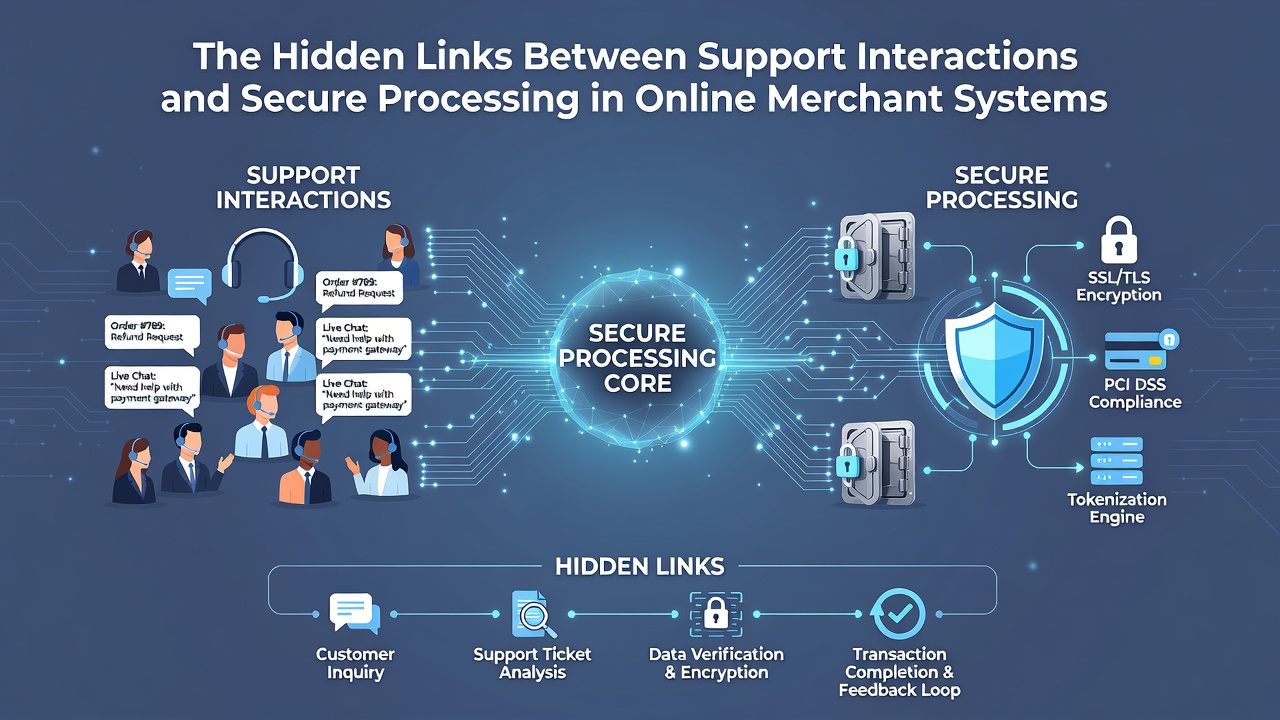
Another instance revealed that when support resolved a billing dispute by updating stored credentials, the change automatically propagated to the secure processing environment with audit trails that included the agent's identifier and the customer's confirmation steps. This approach ensures that any subsequent transactions reflect the updated parameters while maintaining compliance records for external audits. Those analyzing these systems note that the process avoids redundant data entry because the support interface pulls verification protocols directly from the same repositories used during payment authorization.
Technical Mechanisms Enabling Data Flow and Protection
Secure processing in merchant environments depends on layered encryption and access controls that extend to support channels through role-based permissions and encrypted channels for internal communications. Research from institutions like those affiliated with the National Institute of Standards and Technology outlines how support systems incorporate elements such as multi-factor prompts during ticket creation, which then align with processing requirements for high-value transactions. The reality is that without these ties, discrepancies between customer-reported issues and actual transaction data could go unnoticed until after settlement occurs.
Platforms often employ event-driven architectures where a support action, such as flagging an account for review, initiates a cascade that pauses or reroutes pending authorizations in the processing queue. This method allows for immediate adjustments based on interaction history while preserving the integrity of the overall transaction sequence. Figures from industry reports reveal that organizations implementing these connections experience fewer processing interruptions because potential issues surface through unified monitoring rather than fragmented departmental reviews.
Regulatory Influences on Support and Processing Alignment
Compliance frameworks require that support interactions involving personal or financial data adhere to the same standards applied during transaction handling, including audit logging and data minimization practices. Sources from regulatory bodies across regions, including guidance issued by authorities in Canada, emphasize documentation of how assistance records influence security decisions to maintain accountability. Merchants adapt by configuring their systems so that support workflows automatically generate entries compatible with processing audit trails, ensuring consistency across both functions.
What's interesting is how these alignments extend to renewal procedures and account maintenance tasks, where support teams verify details that directly affect the parameters used in ongoing transaction validation. The connections reduce opportunities for unauthorized changes to propagate through the system because verification steps draw from shared, protected data stores. Observers note that this setup supports scalability as merchant volumes grow, since automated links handle routine alignments without proportional increases in manual oversight.
Conclusion
The links between support interactions and secure processing form an interconnected framework that processes customer data alongside transaction flows to maintain operational integrity. Evidence from multiple implementations shows that these connections rely on standardized interfaces, shared logging, and aligned verification protocols to handle issues efficiently. As merchant systems evolve, the emphasis remains on preserving these pathways through consistent technical and procedural measures that treat assistance records as integral components of the security landscape.